Panga, PEZA Quietly Build the Next Philippine Investment Frontier
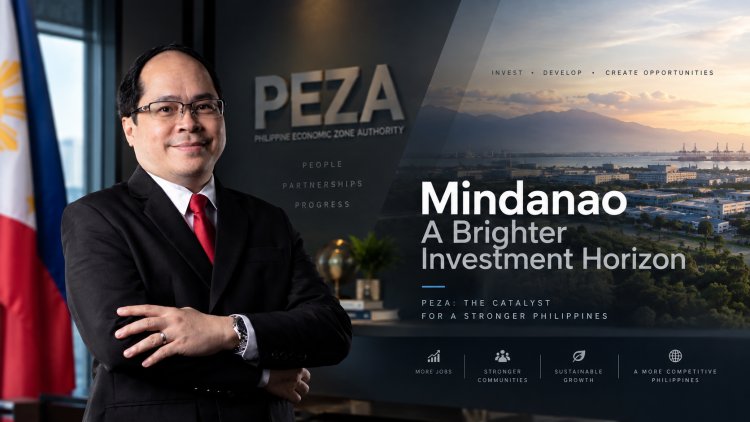
PEZA Director General Tereso Panga highlights Mindanao’s growing investment potential as PEZA drives jobs, industries and economic growth across the region.
While major infrastructure projects, corporate expansions and billion-peso investments often capture public attention, the work of creating the environment where those investments can actually take root receives far less visibility.
Behind many of these developments is the Philippine Economic Zone Authority (PEZA), led by Director General Tereso “Theo” O. Panga, whose work in expanding economic zones and attracting investments is helping shape where the next generation of Philippine growth could emerge.
One of the clearest examples is Mindanao.
At the “Breaking Ground: Engineering the Next Philippine Economy” executive forum held on September 8, 2026, at the Manila House Private Club in Bonifacio Global City, Panga presented a picture of Mindanao that goes beyond its traditional image as an agricultural and resource-rich region.
During the Executive Fireside Exchange moderated by John Dang, Panga joined Austrian Ambassador Johann Brieger, Damosa Land President and CEO Ricardo Lagdameo, and Glacier Megafridge President and CEO Arturo C. Yan in discussing competitiveness, changing global supply chains and emerging investment opportunities.
For Panga, bringing investment outside the country's traditional economic centers is not simply a regional policy.
“Expanding investment beyond Metro Manila is not merely regional development—it is national development,” Panga said.
A transformation happening beyond the spotlight
PEZA's presence in Mindanao is already substantial.
Figures presented by Panga showed that the region has 42 PEZA economic zones and 139 enterprises, representing more than ₱170 billion in investments and providing over 78,000 direct jobs.
Nationwide, PEZA reported 436 operating economic zones, with its ecozone ecosystem supporting approximately 1.82 million direct jobs during the first half of 2026.
The numbers illustrate the scale of an agency whose influence on investment and employment can sometimes be less visible to the general public than the companies and projects operating within the economic zones it helps develop and promote.
PEZA's role extends beyond approving economic zones. Its broader mandate places the agency at the intersection of government policy, investors, developers and communities—helping create locations where businesses can establish operations, employ Filipino workers and participate in global markets.
Under Panga's leadership, that role is increasingly focused on bringing more of those opportunities beyond Metro Manila and established industrial centers.
Mindanao as the next frontier
Mindanao offers several advantages for investors, including a skilled workforce, competitive operating costs, natural resources and a strategic position within Southeast Asia.
Panga sees opportunities in advanced manufacturing, agribusiness, renewable energy, logistics and mineral value-adding—industries capable of connecting Mindanao more deeply with regional and global value chains.
This comes at a time when international companies are reassessing where they manufacture, source materials and establish supply-chain operations.
For the Philippines, that shift creates an opportunity not only to attract additional foreign investment but also to introduce investors to regions that historically received less attention than Metro Manila and the industrial corridors of Luzon.
Mindanao could become one of the beneficiaries.
Building an ecosystem, not simply attracting capital
Panga's message also goes beyond investment figures.
For PEZA, the larger objective is for investments to translate into quality employment, stronger Filipino enterprises, greater export value and deeper participation by local businesses and workers in global value chains.
That distinction is important.
Economic zones are not simply locations where factories and companies operate. When properly developed, they can become economic ecosystems that connect infrastructure, industries, workers, suppliers, communities and international markets.
PEZA is now consolidating Mindanao's economic zones under PEZA Cluster 4, an initiative designed to strengthen coordination, investment promotion and investment generation across the region.
It represents the kind of institutional work that rarely dominates headlines but can influence where companies invest—and where thousands of future jobs are eventually created.
The quiet catalyst
The transformation of Mindanao into a major investment destination will not happen through a single project, company or government initiative.
It will require years of coordinated work involving national and local governments, private developers, foreign and Filipino investors, infrastructure providers and communities.
PEZA occupies a critical position within that ecosystem.
And under Panga, the agency is pursuing a strategy that could gradually redraw the country's investment map—bringing economic opportunities to areas that have historically stood outside the Philippines' largest industrial centers.
The factories, logistics hubs, renewable-energy facilities and new businesses that eventually emerge will naturally become the visible symbols of that development.
But behind them will be the less visible work of building economic zones, connecting investors, developing policies and creating the conditions that make those investments possible.
That may ultimately be PEZA's most important contribution: serving as a catalyst for economic development whose impact is often more visible in investments, businesses and jobs than in headlines.
And in Mindanao, that impact is beginning to take shape.
Source: Philippine Economic Zone Authority (PEZA)