Philippine Television: From Analog Screens to Digital Platforms
Television has evolved from scheduled programs received through antennas into an ecosystem that also includes cable, digital terrestrial signals and internet
Television has evolved from scheduled programs received through antennas into an ecosystem that also includes cable, digital terrestrial signals and internet distribution. Philippine television has a long tradition of entertainment and public affairs.
Historical coverage should distinguish the launch of a station from the introduction of a technology. Archive recordings, program schedules and interviews with retired workers can help reconstruct local broadcasting history.
Digitizing old tapes involves more than converting their format. Archivists need to record dates, ownership, program titles and the conditions under which footage may be reused.
Source and further reading: https://ncca.gov.ph/about-ncca-3/subcommissions/subcommission-on-cultural-disseminationscd/communication/philippine-television-thats-entertainment/
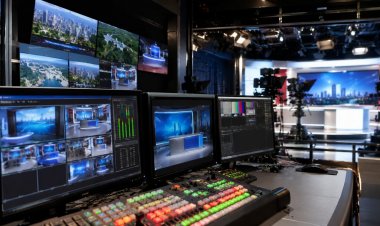
Illustrative photograph: Television camera by Krish Dulal, Wikimedia Commons, CC BY-SA 3.0 (https://creativecommons.org/licenses/by-sa/3.0/). Original: https://commons.wikimedia.org/wiki/File:Television_studio_HTV.jpg. Photograph is illustrative, not a depiction of a specific Philippine event.